

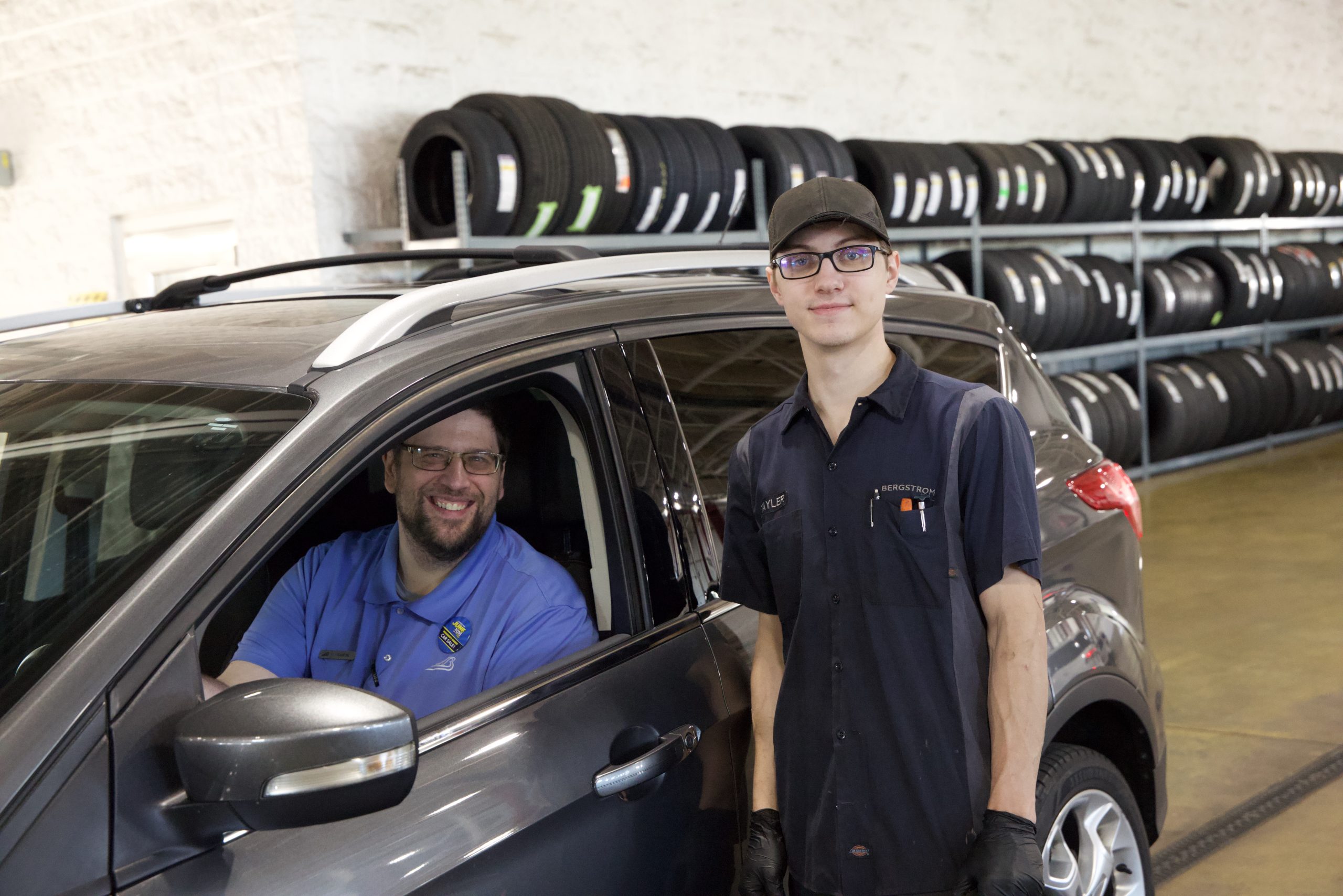
Many of our customers ask what actually happens to their vehicle when they drop it off for routine maintenance. A minor car service is a routine check-up designed to keep your vehicle running efficiently and prevent premature wear on critical components. Think of it as a proactive wellness visit for your car. Rather than fixing broken parts, this service focuses on the absolute essentials to ensure safety, reliability, and peak performance during your daily Appleton commute .
The cornerstone of this visit is changing the engine oil and the oil filter. Over time, engine oil degrades, loses its lubricating properties, and accumulates tiny metal particles and debris. If ignored, this old oil can slowly build sludge, increase internal friction, and shorten the lifespan of your engine. Along with fresh oil, our factory-trained technicians will inspect and top up vital fluids, including coolant, brake fluid, and windshield washer fluid. They also perform a detailed visual inspection of the brake pads, tire tread depth, and battery health to ensure you are fully prepared for the changing Wisconsin seasons.
If your vehicle is approaching its next maintenance milestone, you can easily book your appointment online for transparent, convenient care. For drivers planning their visit, our modern service facility is easy to locate on Victory Lane. If you have any questions about your vehicle’s specific maintenance schedule, please give our service department a quick call to consult with an expert.
Table of Contents
- What Is a Wheel Alignment and What Does It Do for Your Drive?
- Understanding the Critical Difference Between Auto Service and Repair
- The Breakdown of a Basic Car Service and What Is Included
- Comparing a Minor Service to a Major or Full Service
- Answers to Common Questions About Vehicle Care
- Keep Your Genesis Performing at Its Best with Scheduled Maintenance
What Is a Wheel Alignment and What Does It Do for Your Drive?
Have you ever noticed your steering wheel sitting slightly off-center while traveling down a perfectly straight road? This common issue is usually the first indicator that your vehicle requires a wheel alignment. Unlike tire balancing, which corrects weight distribution within the wheel assembly, a wheel alignment is an adjustment of your vehicle’s suspension system. This process recalibrates the angles at which your tires make contact with the pavement, ensuring they roll straight and wear evenly.
During a standard wheel alignment, which typically takes between 45 and 60 minutes, a certified technician focuses on adjusting three critical angles:
- Camber: The inward or outward tilt of the tire when viewed directly from the front of the vehicle.
- Toe: The degree to which the tires turn inward or outward when viewed from a bird’s-eye perspective.
- Caster: The angle of the steering axis when viewed from the side of the vehicle, which balances steering, stability, and cornering.
When drivers bring their vehicles in because they notice a subtle drift on the highway, they often ask why a car pulls to one side when driving straight. The explanation is straightforward: when the suspension angles on one side of the vehicle do not match the other, it creates unequal forces that pull the vehicle in the direction of the wheel with the greater angle. Misalignment can happen gradually from daily driving or suddenly after hitting a deep pothole. Proper alignment is also crucial for advanced driver assistance systems like adaptive cruise control and collision avoidance technology, which rely on precise vehicle tracking to function correctly. Keeping these angles calibrated ensures a smooth ride quality and keeps your family safe on the road.
Understanding the Critical Difference Between Auto Service and Repair
While many vehicle owners use the terms “service” and “repair” interchangeably, they represent two completely different approaches to vehicle care. Auto service is a proactive, scheduled defense designed to maintain your vehicle’s health and prevent mechanical failures before they occur. Routine visits for fluid swaps, tire rotations, and multi-point inspections keep your vehicle operating efficiently and can reduce the risk of unexpected breakdowns by up to 45%.
In contrast, auto repair is a reactive, corrective action taken when a component has already failed, worn out, or malfunctioned. This includes tasks like replacing a failed alternator, repairing a leaking water pump, or diagnosing a check engine light. Because repairs deal with active failures, they are often more complex and can cost significantly more than routine maintenance. For instance, replacing worn brake pads during a scheduled service is a simple maintenance task, but ignoring them can lead to damaged rotors, turning a basic service into an expensive brake system repair.
To maintain the precise engineering of your vehicle, our service center utilizes only components designed specifically for your model. When a part needs replacement, choosing the right components ensures optimal performance and safety. You can request genuine parts online through our dedicated department to guarantee a perfect fit. Staying diligent with your scheduled maintenance not only ensures a smooth ride quality but also protects your factory coverage, as neglecting recommended intervals can void your manufacturer warranty.
The Breakdown of a Basic Car Service and What Is Included
Some drivers assume a basic car service is nothing more than a quick oil change, but a professional maintenance visit is much more comprehensive. At our service center, every basic service is a structured process designed to evaluate the overall safety and mechanical health of your vehicle. Our certified technicians follow a rigorous checklist to ensure no detail is overlooked, providing you with a complete health report at the end of your visit.
A standard basic service includes several key maintenance tasks:
- Engine Oil and Filter Replacement: Draining old, contaminated engine oil and replacing the oil filter to protect internal engine components from premature wear and sludge buildup.
- Fluid Level Checks and Top-Ups: Inspecting and replenishing essential fluids, including engine coolant, brake fluid, power steering fluid, and windshield washer fluid.
- Comprehensive Brake Inspection: Measuring brake pad thickness and visually checking the discs and rotors for signs of uneven wear or heat damage.
- Tire Health and Pressure Check: Examining tires for uneven tread wear, punctures, or sidewall cracks, and adjusting tire pressure to the manufacturer’s exact specifications.
- Battery and Electrical System Test: Testing battery voltage, checking terminal connections for corrosion, and ensuring all headlights, brake lights, and turn signals function properly.
- Under-Body and Suspension Inspection: Conducting a visual check of the steering linkages, shock absorbers, struts, and CV boots to ensure stable handling on rough roads.
During this process, our technicians also look for hidden signs of wear that could cause trouble during a cold Wisconsin winter. By catching a weak battery or a worn belt early, we help you avoid the inconvenience of an unexpected breakdown.
Comparing a Minor Service to a Major or Full Service
While a minor service keeps the basic components of your vehicle in check, a major car service goes much deeper into the mechanical systems. Understanding the difference between these two tiers of maintenance is essential for budgeting and planning your vehicle’s long-term care. A minor service is designed to maintain what is already there, while a major service replaces critical wear items that degrade over extended periods of driving.
To help visualize the difference, consider how these services compare side-by-side:
| Maintenance Feature | Minor Service (Every 7,500–10,000 Miles) | Major Service (Every 30,000–40,000 Miles) |
|---|---|---|
| Engine Oil & Filter | Replaced | Replaced |
| Engine Air Filter | Inspected (replaced if dirty) | Always Replaced |
| Cabin Air Filter | Not included | Always Replaced |
| Spark Plugs | Not included | Replaced |
| Brake Fluid | Inspected only | Flushed and Replaced |
| Engine Coolant | Topped up only | Flushed and Replaced |
| Transmission Fluid | Inspected only | Flushed and Replaced |
| Diagnostic Scan | Not standard | Full Computerized Scan |
A major service is highly recommended for older vehicles or those with higher mileage, as it addresses deeper mechanical components like drive belts and spark plugs that are vital for fuel efficiency and engine performance. If you primarily use your vehicle for short trips around Appleton or spend a lot of time in stop-and-go traffic, you may benefit from scheduling these services slightly earlier. Short commutes prevent the engine from reaching its optimal operating temperature, which can accelerate oil contamination and component wear.
Answers to Common Questions About Vehicle Care
Q: How often should I have my vehicle’s wheel alignment checked?
It is highly recommended to have your wheel alignment checked at least once a year or every 10,000 to 12,000 miles. You should also have it inspected immediately if you experience a hard impact with a curb or pothole, or if you notice your vehicle pulling to one side.
Q: Which parts of a minor car service can I safely do myself?
Experienced owners can often safely handle simple tasks like replacing windshield wiper blades, swapping out the cabin air filter, and checking tire pressure. However, tasks involving engine oil changes, brake inspections, and electronic diagnostics are best left to certified professionals who have the proper equipment and can maintain your vehicle’s warranty.
Q: What kinds of jobs count as auto service rather than repair?
Auto service consists of scheduled, preventive maintenance tasks such as tire rotations, fluid flushes, and filter replacements aimed at preserving vehicle health. Auto repair involves fixing or replacing components that have failed or broken, such as a damaged radiator, a broken starter, or a malfunctioning sensor.
Q: What should I do if my vehicle’s oil pressure warning light comes on?
If your oil pressure warning light illuminates, you should safely pull over and turn off the engine immediately. Driving with severely low oil pressure can cause catastrophic engine failure and potentially void your manufacturer warranty.
Q: How do cold winters in Appleton affect my vehicle’s service needs?
Freezing temperatures and road salt place extra strain on your vehicle’s battery, belts, and suspension components. We recommend scheduling a comprehensive winter inspection to check battery cranking power and ensure your fluids are rated for sub-zero temperatures.
Keep Your Genesis Performing at Its Best with Scheduled Maintenance
At Bergstrom Genesis of Appleton, keeping your luxury vehicle performing at its absolute best is our top priority. Our certified technicians possess the specialized training and diagnostic tools required to maintain the sophisticated engineering of your vehicle. From precise wheel alignments to comprehensive major services, we provide a transparent and supportive experience tailored to your lifestyle. When you choose our team, you gain access to exclusive advantages designed to make vehicle care effortless, including complimentary loaner vehicles and a dedicated service valet.
For those driving a newer luxury utility vehicle, maintaining the advanced multi-link suspension systems on a new Genesis SUV requires specialized calibration equipment that only an authorized facility can provide. You can learn more about the unique advantages of ownership, including complimentary maintenance plans, by exploring the Genesis owner experience. To help you prepare for the road ahead, we invite you to browse current manufacturer service information as well as our local service information before scheduling your next appointment. If you are looking to personalize or protect your vehicle against the elements, you can also shop genuine Genesis accessories directly through our authorized store.
Your peace of mind extends far beyond our service bays. Every new Genesis vehicle comes with complimentary coverage that includes 24/7 emergency support. If you ever experience an unexpected issue on the road, such as a flat tire or a dead battery, you can contact Genesis Roadside Assistance: 844-340-9742 for exclusive, manufacturer-backed support. This service ensures your vehicle is transported directly to an authorized service center where factory-trained technicians will use only genuine parts to protect your warranty.
When your vehicle is ready for its next routine check-up, let our professional team handle the details. You can find us located at 2900 N Victory Ln, Appleton, WI 54913. To coordinate your visit or speak with a service advisor, please contact us directly at (920) 939-3333 today.
© 2026 Bergstrom Genesis of Appleton. All rights reserved.
Connect with us

